A social media bio is the short block of text on a profile that says who you are, what you do, and where people should click next, written inside a strict per-platform character limit that turns every word into a decision.
What is a social media bio?
A social media bio is the small piece of profile copy that introduces an account on Instagram, TikTok, LinkedIn, X, Threads, Facebook, Pinterest, YouTube, and most other networks. It usually lives just below the username and profile photo, runs anywhere from 80 to a few hundred characters depending on the platform, and is one of the first things a stranger reads before deciding whether to follow, click, or keep scrolling.
The shorthand version is simple. A profile is the whole page. The bio is the part of the profile where you get to write something. A good bio for social media answers three quiet questions at once: who is this, what do they make or do, and is there a reason for me to care right now.
Across platforms, the bio sits next to a small set of supporting elements: the display name, the username or handle, the profile picture, an optional pronouns or location field, and one or more clickable links. All of them work together, but the bio is the part the writer actually controls sentence by sentence, which is why so much of the advice you find about Instagram bios, TikTok bios, and LinkedIn bios focuses on those handful of lines.
What is the purpose of a social media bio?
A social media bio carries more weight than its size suggests. It decides whether the right people follow, whether the wrong ones bounce before they leave a vague comment, and whether anyone bothers to tap the link. The job is mostly persuasion, and a little admin.
First impression
A new visitor usually reads the bio before they look at posts. It is the elevator pitch, the introduction, and the filter all in one.
Search and discovery
Platforms read bio text for relevant words. A keyword in the bio can help an account turn up for the right query on a platform search, on a topic page, or in a social media algorithm recommendation panel.
Identity and trust
A specific bio earns more trust than a vague one. A few honest details about role, location, focus, or company outclass a string of buzzwords every time.
Click-through to the link in bio
Most platforms only let you place one clickable link in or near the bio. The bio is what sells that click, whether the destination is a product, a newsletter, a portfolio, or a Linktree-style hub.
Sorting the audience
A clear bio tells the wrong follower not to bother. That sounds blunt, but a smaller, accurate audience is easier to serve than a large, mismatched one.
For a business bio for Instagram or a creator account on TikTok, the purpose tilts harder toward conversion. For a personal LinkedIn bio, identity and credibility usually win. The same words rarely do both jobs, which is part of why a copied-and-pasted bio across every platform feels off no matter how carefully it is written.
What should you put in a social media bio?
A useful bio almost always covers the same handful of building blocks. The order changes, the tone changes, and a strong bio will skip the ones that do not serve it, but the inputs are the same on every platform.
Who you are
Name or brand, role, what you actually do day to day. One specific line beats three general ones.
Who you serve or what you make
The audience or the offer. Bios that name a niche pull the right followers faster than bios written for everyone.
Social proof or credibility
A book, a publication, a notable client, a launch number, a community size, a recognisable employer. One concrete signal earns more trust than three adjectives.
Personality or point of view
A line of voice that makes the account feel like a person or a brand rather than a template. This is where a creator account separates from every other account that does the same thing.
A call to action and the link
Tell people what to click and why. Pair the line with whatever tool sits in your affiliate link, your Linktree, your shop, or your newsletter.
Practical info where it matters
Location for a local business, hours for a service, pronouns where useful, and contact email for a brand account that wants pitches or press.
On Instagram, the visible bio sits below a separate display-name field, so the name field can carry one of the building blocks above and free up bio characters for another. On LinkedIn, the headline and About section split the same job between a 220-character pitch and a 2,600-character story, which means you do not have to cram everything into one sentence.
How long can a social media bio be on each platform?
Bio character limits are tight on purpose. They force the writer to pick the strongest words and skip the filler. These are the current platform limits for the visible bio or its closest equivalent.
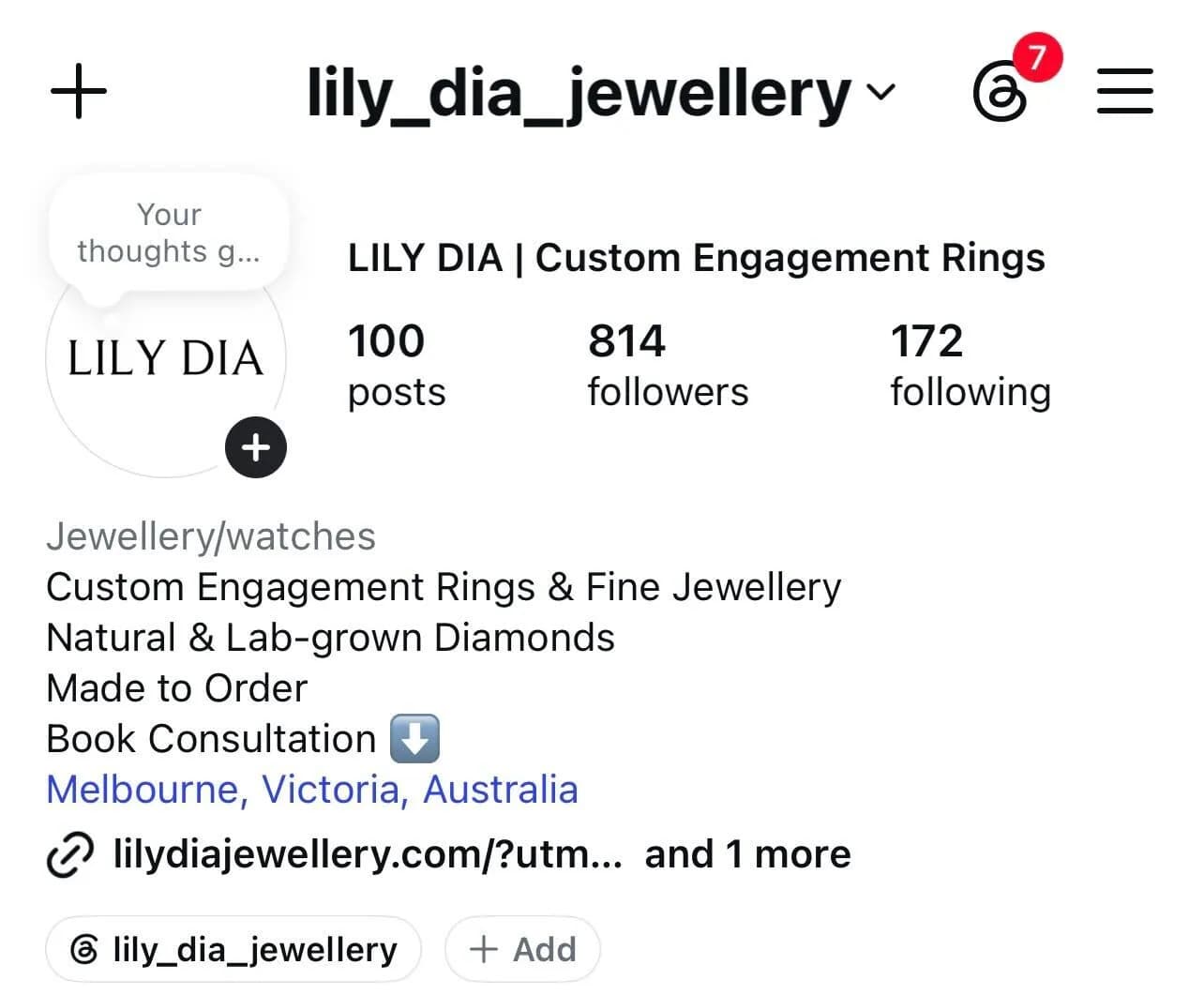
Instagram bio. 150 characters in the bio field, with a separate display name above it. Hashtags and at-mentions become tappable inside the bio.
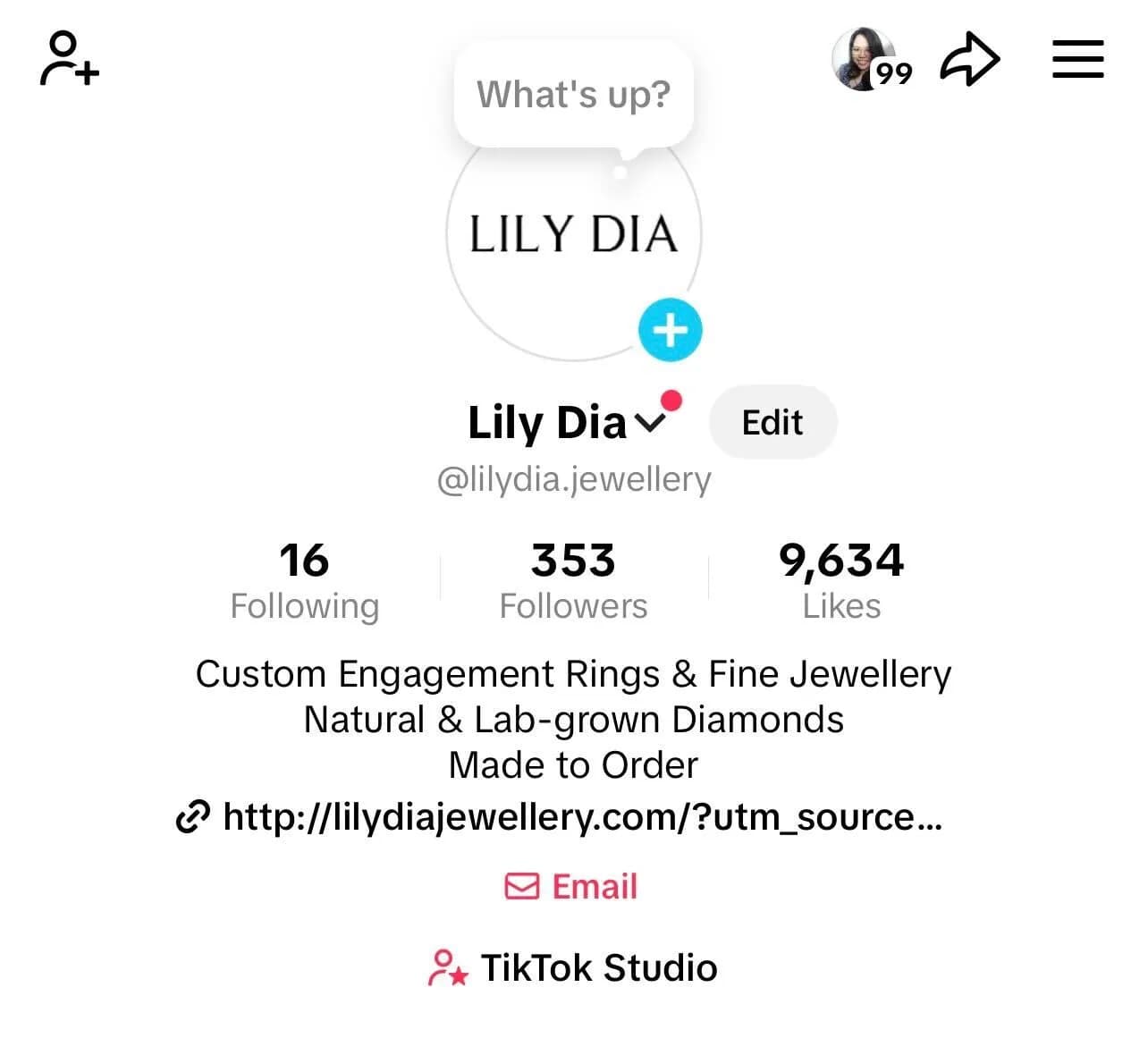
TikTok bio. 80 characters. The shortest mainstream bio, so every word has to earn its place.
X bio. 160 characters, with mentions and hashtags clickable in the field.
Threads bio. 150 characters, mirroring Instagram. The Threads bio carries over from your Instagram profile if you set it up that way.
LinkedIn headline. 220 characters of pitch under the name, the part of the LinkedIn bio that shows up everywhere your name appears on the site.
LinkedIn About section. Up to 2,600 characters of longer-form story, more like a short cover letter than a one-line bio.
Facebook page intro. Around 101 characters of intro plus a much longer About section for hours, history, and contact details.
Pinterest bio. 500 characters, generous compared to Instagram or TikTok and useful for pulling search keywords into the profile.
YouTube channel description. Up to 1,000 characters in the channel About tab, which doubles as long-form bio and channel pitch.
Anything you cannot fit into a single field usually belongs in the link or the pinned post. For multi-platform editing, a social media character counter is the quickest way to test a draft against every limit at once before you publish.
How do you write a good social media bio?
The best bios feel obvious once you read them. Getting there is rarely accidental. A repeatable approach works for personal, creator, business, and team accounts alike.
- Decide the one job the bio has to do. Drive newsletter sign-ups, book consults, sell a product, attract collaborators, fill recruiter searches. One job clarifies every word that follows.
- Write the bare facts first: name, role, what you make, who it is for, one credibility signal. Skip the warm-up phrases. Skip the rhetoric.
- Layer in a line of voice or point of view. This is the part that turns a templated bio into one a stranger remembers an hour later.
- Add a clear call to action that matches the link in bio. The bio and the link should answer the same question.
- Trim to fit. Read it aloud. If a line could belong to anyone in your niche, rewrite it until it could not.
- On Instagram and TikTok, format with intentional line breaks. The Instagram line break tool keeps the formatting from collapsing into one paragraph.
- Test the look on a phone. Bios that are written on desktop often read awkwardly in the small profile rectangle people actually see.
Style tools like the Instagram font generator help with visual rhythm where the platform allows it. On LinkedIn the equivalent move is to use the LinkedIn headline generator to test a few angles before committing the 220 characters that appear in every search result your name shows up in.
What is link in bio?
Link in bio is the catch-all phrase for the clickable URL that lives on a social media profile, plus the small ecosystem of tools that have grown up around it. The phrase exists because most platforms, most notably Instagram and TikTok, only allow one clickable destination from the profile area, so creators stack many destinations behind it.
The native single link
Every platform offers some version of one link in or near the bio. On Instagram and TikTok it is the website field. On X it is the URL slot. On LinkedIn it is the website link in the introduction section.
Multi-link platforms
Linktree for Instagram and Linktree for TikTok are the most recognised, but Beacons, Bio Sites, Stan, and dozens of others all do the same job: give one short URL that fans out into many.
Native multi-link features
Instagram allows up to five links inside the profile area. LinkedIn lets creators pin a featured section. TikTok now allows clickable bio links for eligible accounts, which is why so many people search how to add link to TikTok bio.
Owned destinations
A landing page on your own site is the most flexible link in bio. It is also the only version where every analytics question, every cookie rule, and every redesign is yours to control.
For most creators, the right pattern is one link that points at one clear job at a time. A homepage as the link in bio is rarely the right answer, because it makes the visitor do the navigating. A campaign landing page, a newsletter sign-up, a single product, or a feature post almost always converts better than a generic homepage. The bio sells the click, and the link in bio destination has to hold up its end.
How do bios differ across Instagram, TikTok, LinkedIn, and X?
Each platform wants something slightly different from the bio because each platform has a slightly different audience habit. The building-block list above stays the same, but the emphasis shifts.
Instagram bio
150 characters, often broken across three or four lines, with emojis used as visual bullet points. Strong Instagram bio ideas usually pair a clear niche, one social-proof line, and a directional call to action above the link.
TikTok bio
80 characters is brutal. The TikTok bio works hardest as a positioning line, not a list. The link in bio carries more of the work, and the pinned videos finish the introduction the bio cannot.
LinkedIn bio
Two layers. The 220-character headline is the searchable, repeatable hook. The 2,600-character About section is the longer story, written in first person, that closes the loop on what your headline promised.
X bio
160 characters. Voice matters more than format here. Hashtags and at-mentions are clickable, but a bio of nothing but tags reads like spam. One sharp line of identity outperforms five soft ones.
Threads, Facebook, Pinterest, YouTube
Threads piggybacks on Instagram. Facebook intros are short, with a longer About to back them up. Pinterest bios are SEO-friendly because of the keyword room. YouTube channel descriptions act like a longer-form bio for the channel as a whole.
Platform documentation is worth bookmarking when you write or edit a bio. Meta walks through how to add a bio to your Instagram profile, and LinkedIn covers both the headline and the About section in dedicated help articles.
What mistakes should you avoid when writing a bio?
Most weak bios share the same handful of habits, and most of them are small enough to fix in one editing pass.
Trying to speak to everyone
A bio that fits any creator in your niche fits no specific follower. A small, named audience beats a vague mass.
Stacking adjectives instead of facts
Words like passionate, dedicated, and dynamic do not differentiate. A specific role, a real number, or a real client carries the weight of all three together.
Forgetting the call to action
If the bio does not direct the reader, the profile becomes a museum. Tell people what the link in bio is and why they should care.
Pasting the same bio across every platform
An Instagram bio crammed onto TikTok loses half of itself. A LinkedIn headline ported to X reads as corporate. Rewrite for the room.
Ignoring keywords for search
Profile search uses bio text. If a buyer would type a phrase to find what you do, a version of that phrase should appear in the bio without forcing the sentence.
Never updating the bio
A bio that talks about last year's offer is silently telling new visitors the account is asleep. A short quarterly review is enough to keep the bio honest.
Social media bio FAQ
What is the difference between a bio and a profile?
A profile is the whole page that holds your username, photo, posts, and any verified or business badges. A social media bio is the short block of text inside that profile that explains who you are and what people will find if they follow you.
Can you use the same bio across every social media platform?
You can keep the message consistent, but the bio itself usually needs editing for each platform. Instagram bio character limits are tighter than LinkedIn, TikTok bios sit at 80 characters, and a strong LinkedIn About section often runs hundreds of words longer than anything you would put on X or Threads.
Should a social media bio include emojis?
Emojis work well on Instagram, TikTok, and Threads, where the visual rhythm of the bio matters as much as the words. They feel out of place on LinkedIn for most roles, and on X they can read as either playful or noisy depending on the tone of the account.
How often should you update your social media bio?
Update the bio when the offer, the role, the current focus, or the link in bio changes. A quick review every three months is enough for most accounts. A creator running campaigns, a launch, or seasonal product drops will swap the bio more often than that, sometimes weekly.
Should a business bio for Instagram be different from a personal bio?
Yes. A business bio for Instagram leads with what the company does and who it serves, then sells the click to the link in bio. A personal bio leans more on identity, taste, and current focus. Both should be specific, but a business bio carries more of a buying-intent job.