A social media algorithm is the ranking and recommendation system a platform uses to decide which posts, videos, ads, accounts, and topics appear for each person, in which order, and how often.
What is a social media algorithm?
In plain English, a social media algorithm is the sorting system behind the feed. It looks at the content available to show you, looks at what the platform knows about your behavior, then predicts which posts are most likely to keep you interested, informed, entertained, or active.
Early social feeds were mostly chronological. Newer feeds are usually ranked. That means a post from three hours ago can appear above a post from three minutes ago because the platform predicts it is more relevant to you. The same post can be shown high in one person's feed, low in another person's feed, and never shown to a third person at all.
For creators and marketers, the important shift is this: distribution is earned one audience signal at a time. The platform is watching how real people respond, then using those responses to decide whether the post deserves more tests, more reach, or a quiet fade into the archive.
How do social media algorithms work?
The exact formulas are private, change often, and differ by platform, but the broad pattern is fairly consistent. A ranking system gathers a pool of eligible content, reads a large set of signals, predicts what a user is likely to value, then orders the feed or recommendation surface.
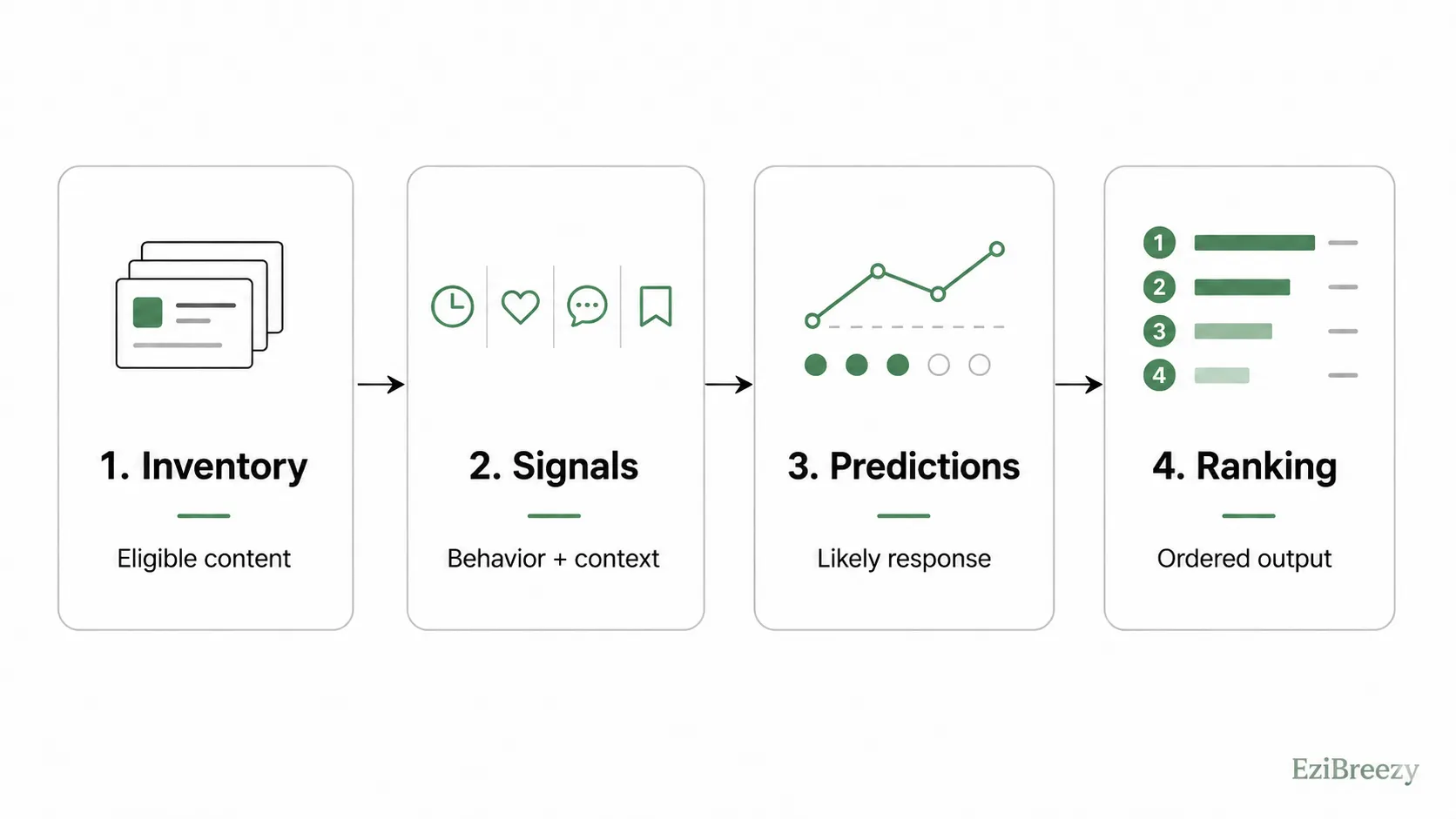
Inventory. The platform starts with content it could show, such as posts from accounts you follow, recommended posts from accounts you do not follow, ads, trending topics, and recent uploads.
Signals. The system reads clues about the user, the post, the creator, and the context. A like, a save, a watch-through, a skipped video, a comment, a language setting, and the age of the post can all become signals.
Predictions. The platform estimates what might happen if it shows that content. Will the person watch, comment, share, hide, report, click, follow, or leave the app?
Ranking. The system orders content by predicted value and safety rules, then keeps learning from what happens after the post is shown.
This is why algorithm advice gets messy. The platform is not deciding once for everyone. It is constantly making smaller decisions for individual people, surfaces, formats, and sessions.
What ranking signals do social algorithms use?
A ranking signal is any clue a platform can use to judge whether a post fits a person in that moment. The weighting changes by app and surface, but these groups appear again and again.
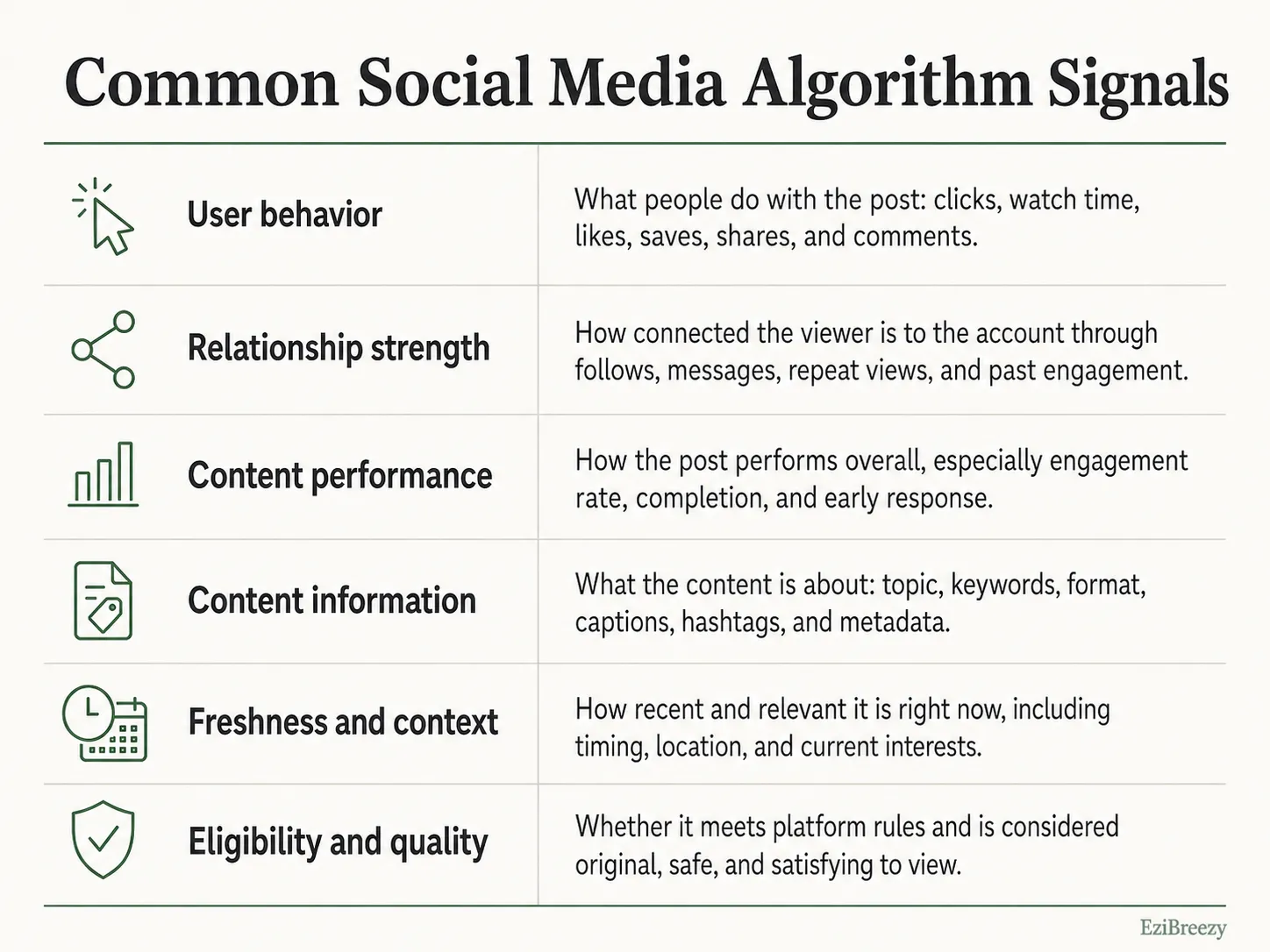
User behavior
Past likes, comments, shares, saves, searches, watch history, follows, hides, reports, and topics the person keeps returning to.
Relationship strength
How often the person interacts with the account, whether they message each other, whether they view each other repeatedly, and whether close connections are engaging with the same post.
Content performance
How people respond when the post is shown: watch time, completion rate, rewatches, click-through rate, saves, shares, comments, replies, and negative feedback.
Content information
Format, topic, caption, keywords, audio, hashtags, visual content, language, location, accessibility metadata, and whether the post matches a known trend or interest cluster.
Freshness and context
How recent the post is, what device the person is using, time of day, session length, and whether the surface is built for friends, discovery, search, entertainment, or professional relevance.
Eligibility and quality
Whether the content follows platform rules, avoids low-quality patterns, meets recommendation guidelines, and gives the system enough clear information to classify it.
How do algorithms differ by platform?
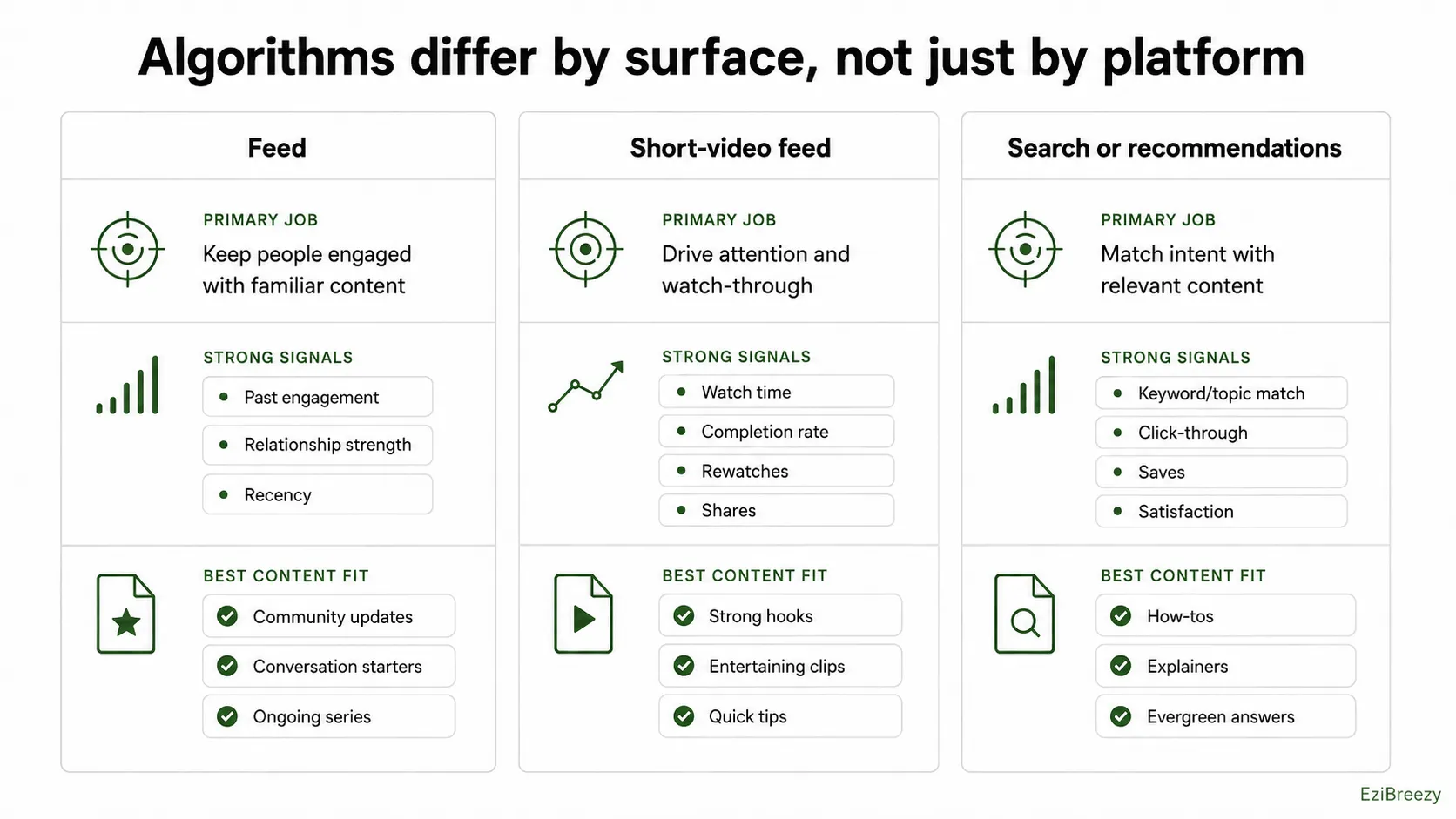
Each platform has a different job to do, so each ranking system rewards different behavior. The same video might travel on TikTok because people finish it, stall on Instagram because no one shares it, and work on YouTube because it keeps satisfying searchers for months.
Instagram and Facebook
Meta says its AI systems use signals and predictions to rank Feed, Reels, Stories, and other surfaces, with user feedback playing a direct role. That is why a Reel, Story, and feed post from the same account can perform differently. Read Meta's overview of how AI ranks content on Facebook and Instagram.
TikTok
TikTok says For You recommendations use signals such as user interactions, video information, and device or account settings, with stronger interest signals carrying more weight. Its own explanation says follower count is not a direct recommendation factor. See TikTok's guide to how it recommends videos for For You.
YouTube
YouTube frames its system around viewer personalization, content performance, and long-term satisfaction. That is why a video can grow slowly if searchers and recommended viewers keep choosing it. YouTube's Help Center explains its recommendation system.
Why do algorithms matter for creators and brands?
Algorithms decide a large share of organic reach. Your followers still matter, but the platform may show your post to a small test audience first, then widen distribution if the signals look healthy. That makes content quality, audience fit, and early clarity more important than merely being present.
The practical risk is that creators start writing for a rumor instead of writing for the person on the other side of the screen. A good algorithm-aware post is still a useful post. It gives the right viewer a reason to stop, stay, respond, save, click, or send it to someone else.
This is also where scheduling and measurement matter. A scattered calendar makes it hard to learn what the platform is responding to. A cleaner posting rhythm gives you cleaner comparisons across formats, topics, hooks, and audience segments.
How do you work with the algorithm?
Working with the algorithm means making it easy for the system and the audience to understand who the post is for. The system needs clear signals. The person needs a reason to care.
- Pick a specific audience and topic before choosing the format. Broad content gives the system a blurry first read.
- Match the format to the surface. A search-driven YouTube video, a TikTok For You post, an Instagram Story, and a LinkedIn text post are solving different jobs.
- Make the opening clear. The first seconds, first line, thumbnail, or title should tell the right person why this is for them.
- Earn stronger signals by being genuinely useful. Saves, shares, comments, watch time, replies, and click-throughs usually come from content people want to keep or pass along.
- Publish consistently enough to learn, then review patterns instead of worshipping one viral outlier.
The healthier question is not "What does the algorithm want?" It is "What did this audience prove they wanted when the platform tested the post?"
What should you measure?
Likes are easy to see, but they rarely tell the whole story. If you want to understand algorithmic distribution, measure the signals that show whether people stopped, stayed, and acted.
- Reach and impressions, split by followers and non-followers where the platform gives you that view.
- Watch time, average view duration, completion rate, replay rate, and retention drop-off for video.
- Saves, shares, comments, replies, profile visits, clicks, follows, and the engagement rate for each post.
- Topic, format, hook, publish time, platform, and campaign tags, so the next review compares useful patterns instead of loose memories.
- Business outcomes such as newsletter sign-ups, trial starts, sales, qualified leads, or affiliate clicks when the post has a commercial job.
A simple review habit beats most algorithm hacks: group similar posts, compare the signals that moved, and make the next post a little clearer for the people who already showed they care.
Social media algorithm FAQ
Do all social platforms use the same algorithm?
No. Every platform uses its own ranking systems, and most large platforms use several systems inside the same app. A feed, Stories tray, Reels tab, search page, and recommendation panel can all rank content differently.
Can you beat the social media algorithm?
You cannot reliably beat an algorithm as if it were a fixed puzzle. You can improve your odds by making clear content for a specific audience, earning real watch time and interaction, publishing consistently, and measuring what each platform actually distributes.
Does posting more help the algorithm?
Posting more can help if the extra posts are useful and give the platform more chances to understand your audience. Posting more weak content usually trains the system and the audience to skip you faster.
Do hashtags control the algorithm?
No. Hashtags can help classify a post and make it eligible for some searches or topic pages, but they are one signal among many. Watch time, saves, shares, comments, relevance, and viewer feedback usually matter more.
Why did my reach drop suddenly?
Reach can drop because the post topic was weaker, early viewers skipped it, the format did not fit the surface, the platform changed ranking weights, your posting rhythm broke, or a previous spike made the next normal post feel worse than it is.